
Your Shopping Cart


Lamb or mutton for curry? The difference, and which one to buy
Ikhlas Halal Butcher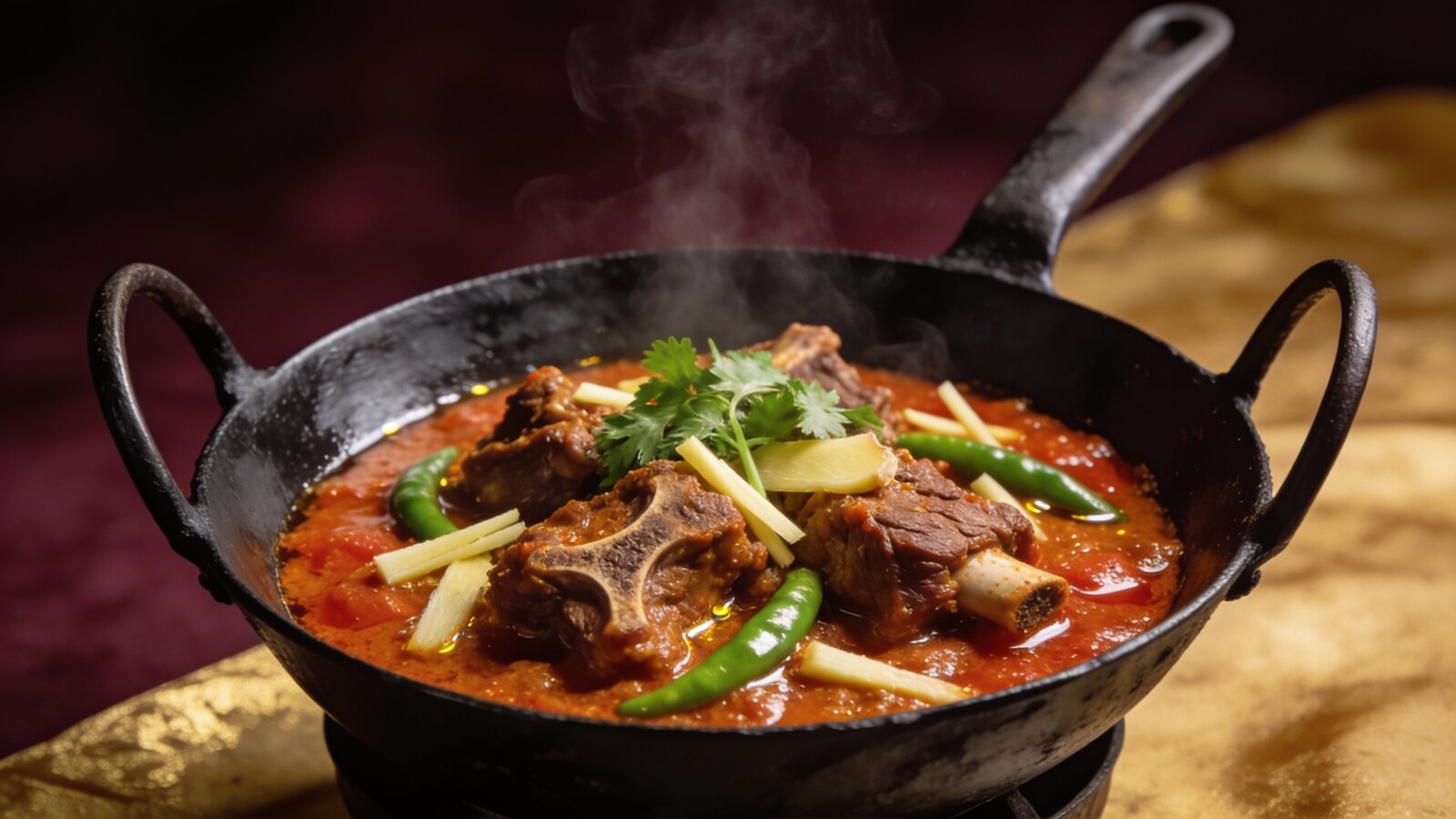
For a traditional curry, buy mutton. For a quick weeknight curry or anything with young children eating, buy lamb. Mutton is meat from a sheep over a year old; lamb is under a year. Mutton has a deeper, stronger flavour and holds up to long cooking with whole spices; it also costs less per kilo at our counter, £8–£12/kg against £12–£17/kg for lamb. The trade-off is time: mutton needs an hour to ninety minutes longer on the stove.
£8–£12mutton per kilo
£12–£17lamb per kilo
+60–90 minextra cooking time for mutton
Lamb vs mutton at a glance
| Lamb | Mutton | |
|---|---|---|
| Age of animal | Under 12 months | Over 12 months (often 2+ years) |
| Flavour | Mild, sweet | Rich, deeper, "sheepier" |
| Texture | Tender quickly | Firmer; tender after long cooking |
| Cooking time for curry | 45–60 minutes | 1½–2½ hours |
| Fat | Lighter | More, and it carries the flavour |
| Price per kilo (Sept 2026, our counter) | £12–£17 | £8–£12 |
| Best for | Karahi, chops, kebabs, roasts | Slow curries, pulao, yakhni, biryani |


Which mutton cut for curry?
Mutton shoulder curry cut on the bone is the everyday answer (£5.50 per 500g). The bone gives the gravy body and the shoulder has enough fat to stay moist over two hours. Mutton mix at £8/kg is the cheapest way to make a big pot, shoulder, neck and rib on the bone. For a pulao or yakhni where you want the stock, neck (£8/kg) and shank (£10/kg) give the richest liquid. Mutton leg (£10.50/kg on the bone) is leaner and better for a dry bhuna where you want defined pieces.
Which lamb cut for curry?
Lamb shoulder at £12/kg or the on-the-bone lamb mix at £13/kg. Ask for curry cut, on the bone, medium pieces. If you want boneless for a quick karahi, boneless leg is £17/kg and cooks in under an hour.
Should it be on the bone or boneless?
On the bone for any curry you are cooking for more than an hour. The marrow and collagen are what make the gravy thick and glossy. Boneless is for speed and for dishes where you eat with a fork, a karahi at a table full of guests, or anything going into wraps. Boneless costs more per kilo because you are not paying for bone, but you are also getting less flavour from the pot.

How to tell them apart at the counter
Mutton is darker, a deep red rather than pink, and the fat is whiter and firmer. The bones are thicker. If you are handed pale pink meat and told it is mutton, it is lamb. At Ikhlas the two are on separate trays with separate tickets, and the price tells you which is which.
Shop the cuts
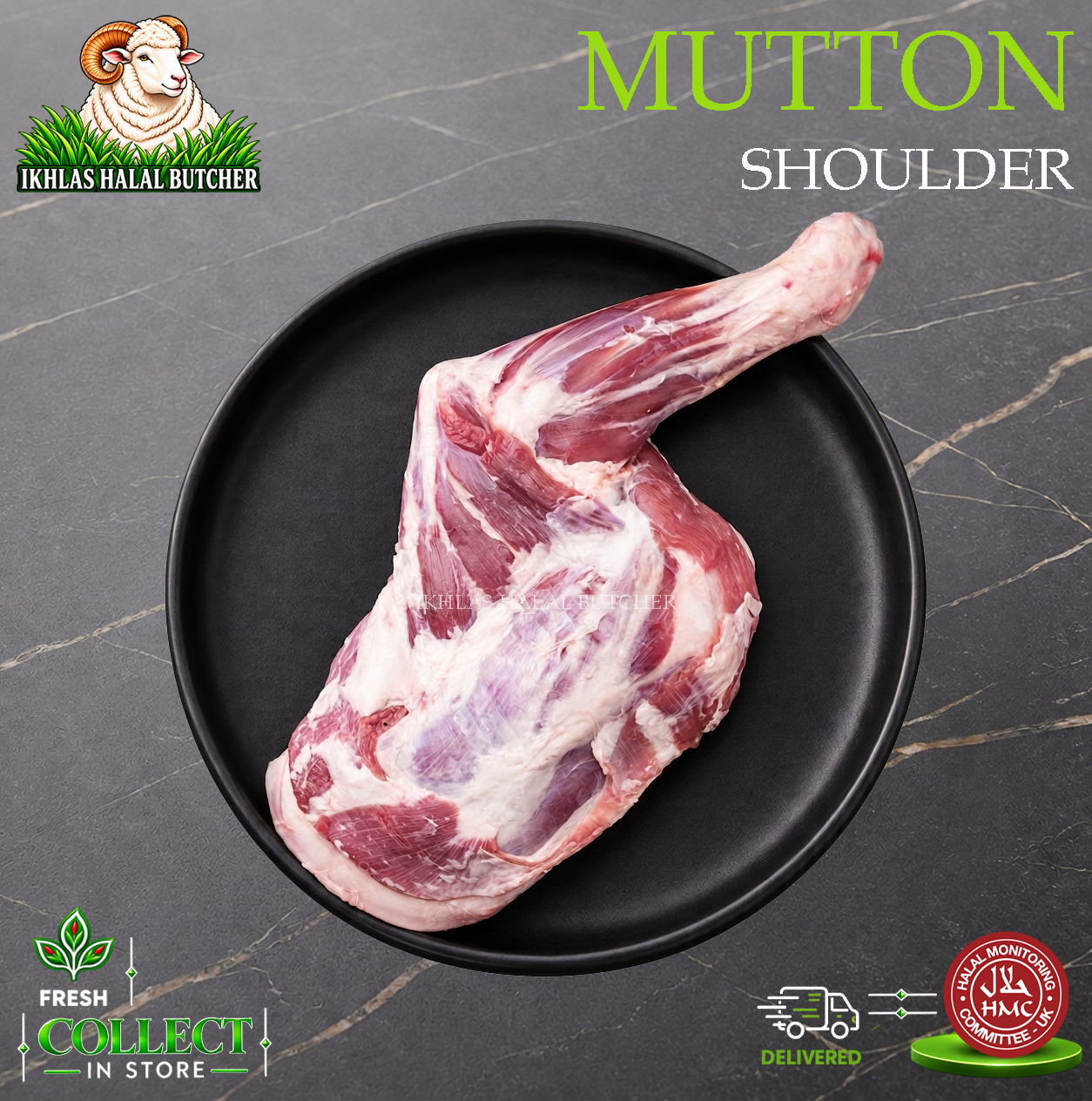
Mutton shoulder curry cut£5.50 / 500g
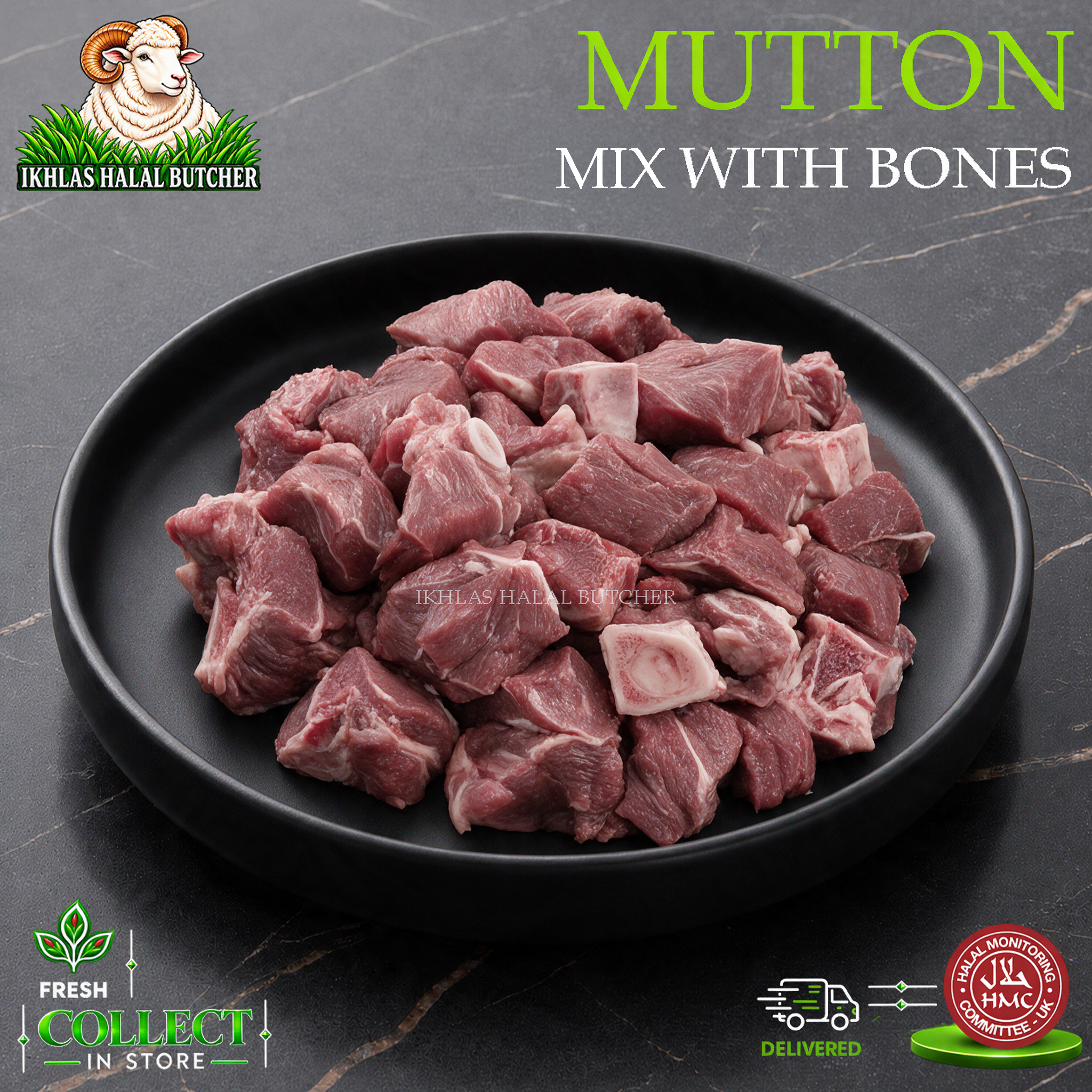
Mutton mix£4.00 / 500g
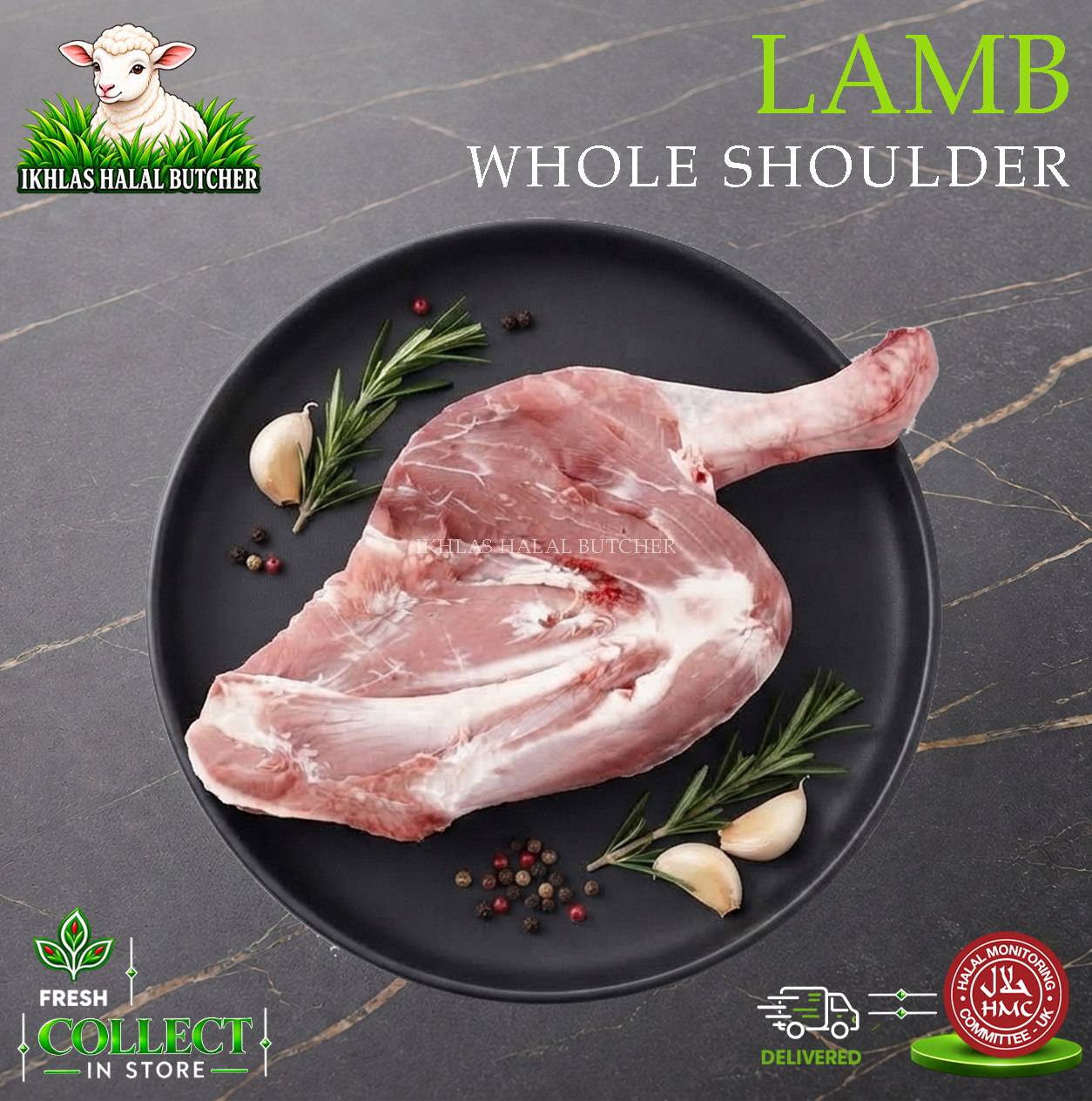
Lamb shoulder£6.00 / 500g
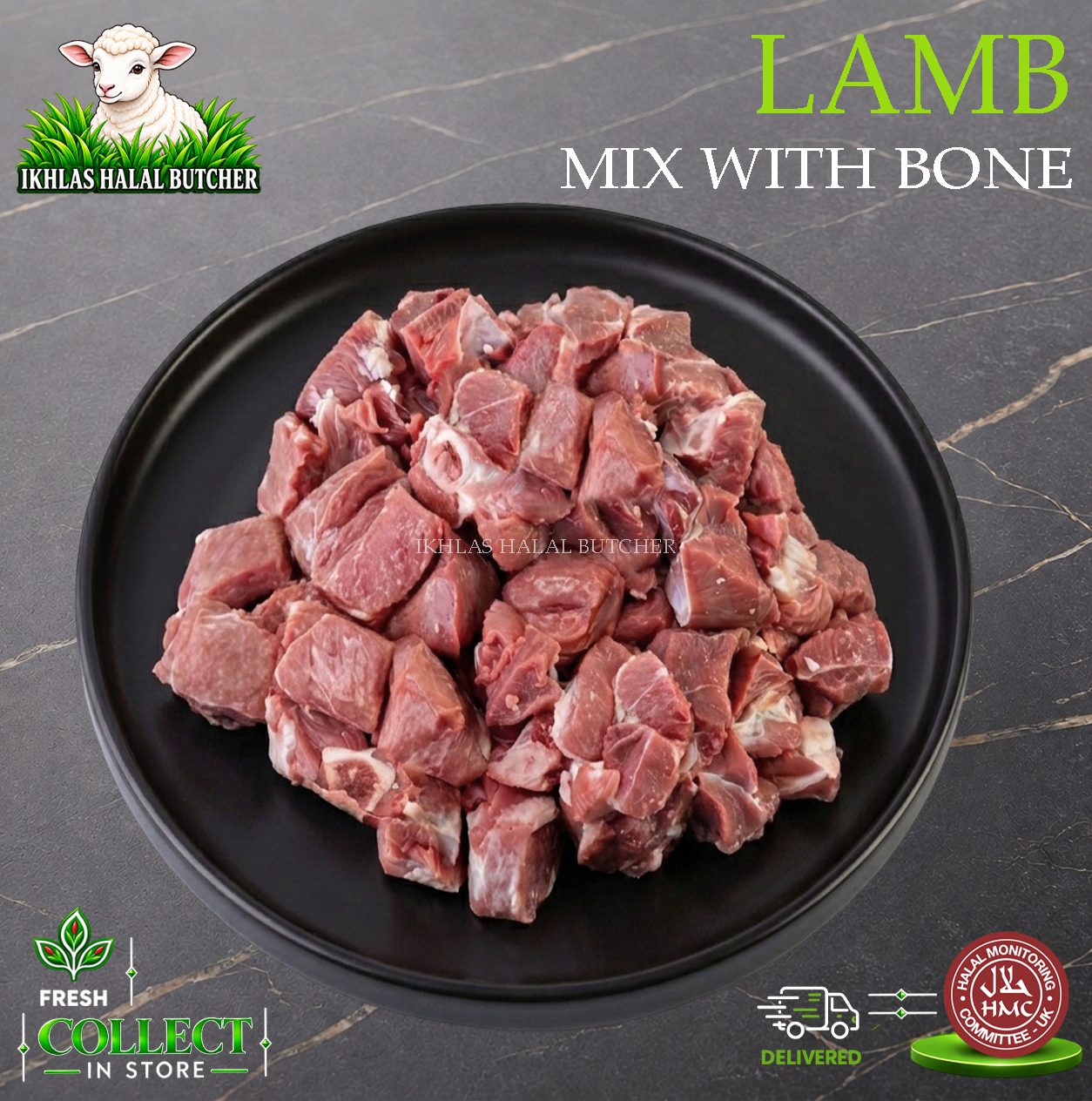
Lamb mix on the bone£6.50 / 500g


Same cuts, different animal: the lamb and mutton charts side by side. Tap to open full size.
Curry cut, on the bone, the way you ask for it
Choose small, medium or large pieces and how many, and the butcher chops it when your order arrives.
Order onlineQuestions people also ask
Is mutton healthier than lamb?
Nutritionally they are close. Mutton is often slightly higher in fat, but most of that renders out in a long cook. Both are good sources of iron and B12.
Why does mutton taste stronger?
Age. Flavour compounds build in the fat as the animal matures. That is exactly why traditional Pakistani and Kashmiri recipes call for mutton, the spices have something to push against.
Can I use lamb in a recipe that says mutton?
Yes, reduce the cooking time by about a third and go easier on the whole spices, or the lamb will disappear behind them.
How much mutton do I need per person?
About 250g on the bone per adult for a curry with rice or roti; 200g boneless. For ten people, buy 2.5kg on the bone.